
A Data-Driven Antidote to Climate Despair
For anyone paying attention to the news, climate change often feels like an overwhelming cascade of crisis. We are constantly confronted with images of devastating storms, prolonged droughts, raging forest fires, and the irreversible retreat of glaciers. While these events are real and demand action, the constant deluge of bad news can paralyze us, replacing motivation with a profound sense of powerlessness and dread.
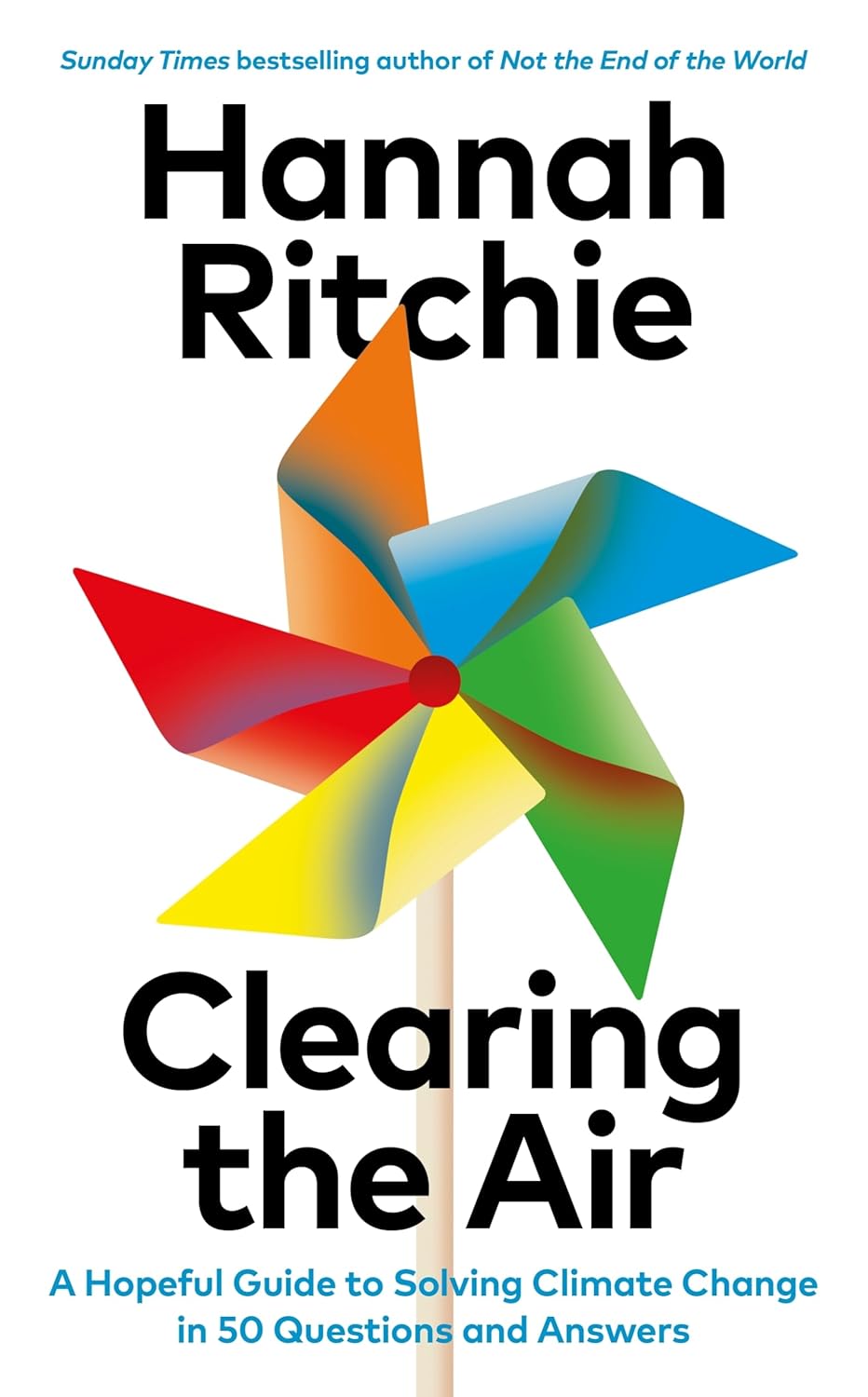
It is precisely this climate anxiety that Hannah Ritchie, a leading researcher in environmental data, addresses head-on in her essential new book, “Clearing the Air: A Hopeful Guide to Solving Climate Change in 50 Questions and Answers.” Drawing on her extensive background with Our World in Data, Ritchie meticulously cuts through the noise and provides what has been desperately missing from the conversation: rigorous, evidence-based answers to the toughest questions we have about climate change, and, crucially, a blueprint for rapid progress.
The Power of the Positive Data
Ritchie’s core argument is simple yet revolutionary: the media often focuses on the stock of emissions (how much carbon is already in the atmosphere) and the resulting catastrophes, while overlooking the rapid progress being made on the flow (how fast new emissions are being cut).
This book reframes the climate challenge, not as an inevitable slide into doom, but as a solvable problem where incredible changes are already happening. She backs this up with comprehensive data, addressing common misconceptions and fears, such as:
- “Is renewable energy too unreliable?” Ritchie shows how steep the cost declines have been and the accelerating rate of deployment, illustrating that the energy transition is not a distant goal, but a present reality gaining unstoppable momentum.
- “Do we all need to go vegan?” Ritchie uses rigorous data to move past the binary of “all or nothing.” She explores the significant impact of food systems but emphasizes efficiency gains, the vast difference in impact between various food types, and the powerful leverage points available within agriculture and diet.
- “Can we ever decarbonize hard-to-abate sectors like concrete and flying?” Ritchie dives into the specific, often messy, solutions for industries like aviation and shipping, showing how innovations like Sustainable Aviation Fuel (SAF) and future electric/hydrogen propulsion are rapidly moving from the lab to commercial reality.
- “Is the technology simply not ready?” Far from it. Ritchie highlights technological solutions, from green steel to Sustainable Aviation Fuel (SAF), that are already proven, scaling rapidly, and just need political and economic support to become the default.
What We Can Do, Right Now
The overwhelming positivity in “Clearing the Air” is not based on blind faith; it’s grounded in the measurable reality of human innovation and collective action. Ritchie powerfully demonstrates that we are not passive observers in this crisis, but active agents with the capacity to reduce carbon emissions far faster than commonly believed.
She illustrates that we have already built the capacity and technological foundation necessary to decarbonize global electricity, and that many countries have demonstrated the possibility of decoupling economic growth entirely from rising emissions. This means we don’t have to choose between development and sustainability.
A Must-Read for Everyone
For our BMG community, this book is an indispensable resource. It shifts the narrative from paralyzing fear to empowering action. It doesn’t minimize the seriousness of the challenge, but it equips the reader with the knowledge to push back against doomism and advocate for high-impact solutions with confidence.
Ritchie say “effective action starts with clear thinking. Wandering around in the dark, fumbling for the lights, is not going to get us there. Rose-tinted glasses won’t do it either. We need an objective and honest vision of what options we have, and what opportunities and challenges they create. We need an informed public that can ask governments for the right things. And an electorate that supports them when they follow through (or votes them out when they don’t). Individuals who know what changes make a difference in their own lives and can inspire those around them to do the same.”
“Clear thinking combined with determined optimism creates a culture of inspiration; the antidote to cynicism that we sorely need.”
“Clearing the Air” is a profound testament to the power of data to inform hope. It is the book to read if you want to understand the true state of climate progress, feel empowered to act, and finally move past the relentless cycle of overwhelming bad news. Pick it up, clear the air, and let’s get to work.